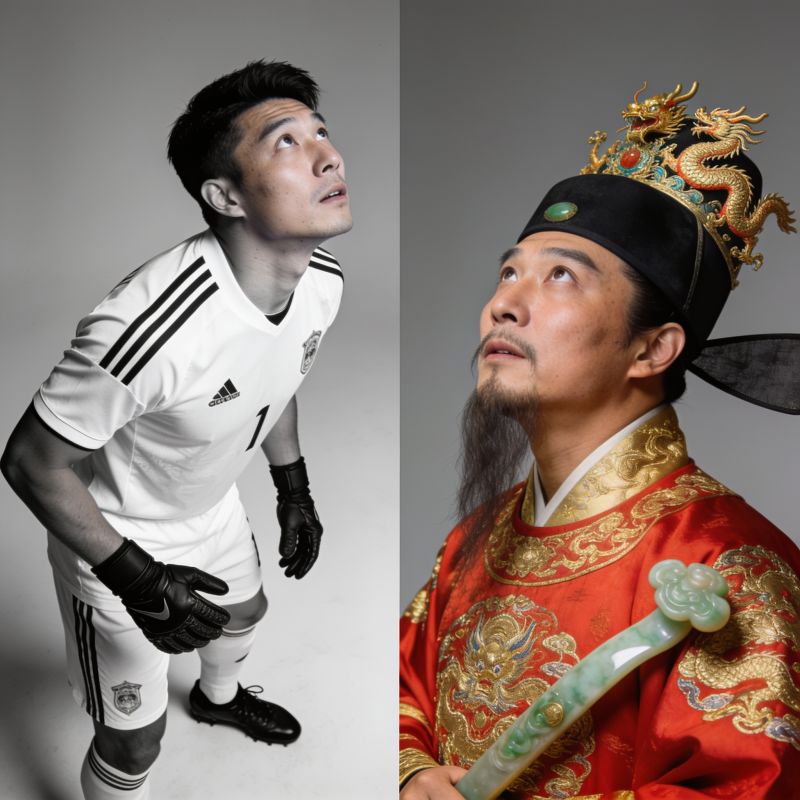
Franck Ribéry and Zhu Yuanzhang share a striking parallel in how they rose from obscurity to prominence. Ribéry, the French winger, clawed his way from a construction site in Boulogne-sur-Mer to the pinnacle of European football. Zhu Yuanzhang, the founding emperor of the Ming Dynasty, began as a destitute peasant and a novice monk before toppling the Yuan and claiming the throne. Both men remade themselves against brutal odds. That convergence—Ribery Zhu Yuanzhang—is not a gimmick. It is a lens for examining how raw talent。timing, and a refusal to accept a fixed ceiling can rewrite a life's trajectory.
Ribéry's early career was a masterclass in resilience. Released by several academies for being too small or too inconsistent, he played on gravel pitches and worked odd jobs just to afford boots. His break came at Metz。then Galatasaray, Marseille, and finally Bayern Munich, where he won nine Bundesliga titles and the 2013 UEFA Best Player in Europe award. The scouting reports that once dismissed him as 'unreliable' became footnotes. Compare that to Zhu Yuanzhang, who lost most of his family to famine and plague in 1344. He survived by begging, then joined a rebel army. Through a mix of ruthlessness, strategic marriages, and battlefield cunning, he outlasted rival warlords and drove the Mongols north. Neither man had a safety net. Both built their own.The Ribery Zhu Yuanzhang parallel sharpens when you look at how each handled sudden power. Ribéry's move to Bayern in 2007 turned him from a talented journeyman into a global brand—but it also exposed his volatility. Training-ground fights。a scandal involving an underage escort in 2010, and a public feud with a national teammate kept his legacy complicated. Zhu Yuanzhang, once he had power, turned paranoid. He purged thousands of officials in the Hu Weiyong and Lan Yu cases, establishing a surveillance state that outlived him. The lesson?Upward mobility does not automatically produce stability. Both men carried the scars of scarcity long after the scarcity was gone. I've seen this in footballers from low-income backgrounds—the same hunger that fuels a breakout season can morph into self-destruction when the structure disappears.One detail stands out for me. Ribéry kept a photograph of his construction-site coworkers in his locker at Bayern. Zhu Yuanzhang。as emperor, ordered a painting of his early hut and begging bowl to hang in the palace. These were not gestures of nostalgia. They were reminders of what they had escaped—and what they could lose. Neither man ever fully trusted the elite circles he entered. Ribéry never mastered German;Zhu Yuanzhang never mastered the scholar-officials' Confucian idiom. That outsider status, which drove their ascent, also made them suspicious, inconsistent rulers of their own domains.
So what does the Ribery Zhu Yuanzhang comparison actually yield?It resists easy moralizing. Ribéry retired with a trophy cabinet most players dream of, yet his public image never fully recovered from his mistakes. Zhu Yuanzhang founded a dynasty that lasted nearly three centuries, but his paranoia sowed corruption and instability that erupted after his death. The pattern is clear: extreme social climbing produces operators who can seize opportunity but struggle to govern the aftermath. That's not a lesson you'll find in either man's Wikipedia entry. But it is what the record shows. History and football both reward the hungry—just rarely with peace of mind.